Culture

Culture

The good, the bad and the ugly in books, exhibitions, cinema, TV, dance, music, podcasts and theatre.

A law unto himself

Lead book review

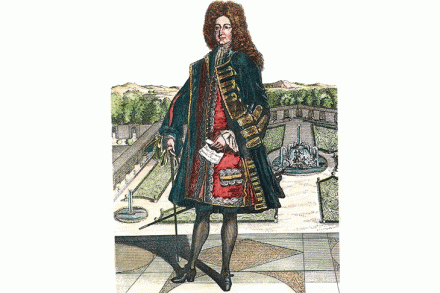
John Law was by any standards a quite remarkable man. At the apogee of his power in 1720, he was the richest private citizen in Europe and controller-general of finance in France, responsible not merely for the country’s income and expenditure but for its commerce, navigation, agriculture and industry. He created and presided over one

A meditation on history

More from Books

It is a truth universally acknowledged that a serious novel must be in want of a theme. Paris Echo soon makes it clear that it has several. It’s about the shifting nature of history and the mysterious footprints of the past in the present. It’s also concerned with the myriad and biased interpretations that we

Dominic Green

Any storm in a port: The Bookshop reviewed

Reports of the death of bookstores are fiction. In 1931, there were about 4,000 bookstores in the United States. Almost all of them were gift stores, selling a limited stock of paperbacks. Only about 500 of them were specialist bookstores, and almost all of them were in major cities. True, between 1995 and 2000, the

A tale of two cities

Arts feature

Not so long ago, the Dundee waterfront was presided over by a great triumphal arch, built to commemorate Queen Victoria’s visit in 1844. It was an imposing piece of decorative architecture, 84 feet high, and it dominates most views of the city painted over the ensuing century. It became a cherished symbol of Dundee but

Hidden treasure | 30 August 2018

Exhibitions

In 1675 Lady Bedingfield wrote to Robert Paston, first Earl of Yarmouth. Never, she exclaimed, had she seen anything so fine as the latter’s mansion, Oxnead Hall. It was ‘a terrestriall paradise’, the ‘gardens so sweet — so full of flowers’, the house so clean. ‘Nor,’ she concluded, ‘did I ever in my life find

Toby Young

The BBC’s anti-white rhetoric

No sacred cows

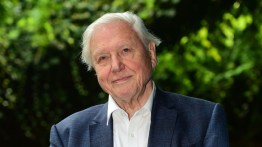
Cassian Harrison, the editor of BBC Four, told the Edinburgh International Television Festival last week that no one wants to watch white men explaining stuff on TV any more. ‘There’s a mode of programming that involves a presenter, usually white, middle-aged and male, standing on a hill and “telling you like it is”,’ he said.

Lloyd Evans

Posh people move house

Theatre

Non-stop chatterbox and mystifyingly revered fabricator of sub-Chekovian paddywhackery, Brian Friel has received another production at the Donmar. His play Aristocrats cadges shamelessly from Three Sisters and The Cherry Orchard. The setting is a crumbling mansion in Donegal occupied by four adult members of the O’Donnell clan (three girls, one boy), who idle around the

Opportunity lost

Cinema

Yardie is Idris Elba’s first film as a director and what I have to say isn’t what I wanted to say at all. I love Elba and wanted this to be terrific. I wanted him to be as good from behind as he is from the front, so to speak. I wanted this to absolutely

Listening habits

Radio

Here’s a thought. Matthew Bannister, former Radio 1 controller turned presenter of programmes such as Outlook on the World Service and Radio 4’s The Last Word, has just announced that he’s leaving Outlook, which goes out several times a week, to ‘join the world of podcasting’. In fact, he’s already launched his own podcast, Folk

James Delingpole

Shark treatment

Television

All the good non-fiction things that were ever on TV — from Kenneth Clark’s Civilisation to David Attenborough’s Planet Earth (the bits where he’s not proselytising about climate doom, I mean), from Andrew Graham-Dixon’s arty jaunts to Italy to Jonathan Meades’s bizarro forays into architecture, from The World at War to all those more recent

Gypsy king

Music

Looney Tunes was always at its best when soundtracked by a Hungarian gypsy dance. (Watch ‘Pigs in a Polka’ if you don’t believe me.) It’s music that was made to chase small cartoon animals — and terrify conductors. The gunshot syncopations. The hand-break turns in tempi. The banana-skin portamenti and rubato ravines… Musical tripwires everywhere.

The great agitator

More from Books

John Lilburne was only 43 when he died in 1657, an early death even for the time. But in many ways it was remarkable that he lived so long. He not only dodged Royalist bullets when fighting for Parliament in the civil war as Lieutenant Colonel Lilburne, but managed to avoid the noose or firing

Beaver believers

More from Books

The British experience of beavers is somewhat limited. Most of us haven’t been lucky enough to have spied an immigrant rodent in the wilds of west Devon, or paid a visit to Knapdale and Alyth in Scotland. Instead, we’ve only met beavers in storybooks, notably The Lion, the Witch and the Wardrobe, where in the

Closure at last

More from Books

And so it comes, the final volume of Karl Ove Knausgaard’s My Struggle sequence: a pale brick of a book, one that might be The End, but is an undertaking all of itself. The previous five books — autofictions that catalogue one’s man’s life in exacting, almost terrifyingly detail — were far from slender, but

A date with Venus

More from Books

There is something about the Transit of Venus that touches the imagination in ways that are not all to do with astronomy. The last Transit occurred in 2012, and if nobody who watched it will ever see another, the sight of that small black dot, making its almost imperceptible progress across the disc of the

The old man and the siren

More from Books

One rainy evening in December 1948, a blue Buick emerged from the darkness of the Venetian lagoon near the village of Latisana and picked up an Italian girl — 18, jet black wet hair, slender legs — who had been waiting for hours at the crossroads. In the car, on his way to a duck

A pearl of great price

Lead book review

Objectivity seems to be difficult for historians writing about Britain’s long and complicated relationship with India, and this makes the even-handedness David Gilmour achieves in books such as The Ruling Caste both unusual and welcome. In his enlightening and wonderfully detailed new portrait of The British in India, he states that he is ‘not seeking

For the love of operetta

Arts feature

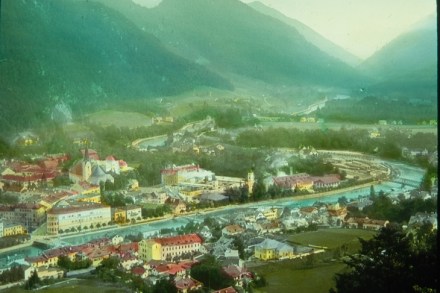
It’s the lederhosen that grabs you first. Two gents were walking down the street ahead of us in full Alpine rig: long socks, collarless loden jackets, and hunting hats decorated with what looked like shaving brushes. Among the flowerbeds and fountains that surround the main theatre of the Bad Ischl Lehar Festival a posse of

Horror show

Exhibitions

‘It is disastrous to name ourselves!’ So Willem de Kooning responded when some of his New York painter buddies elected to call themselves ‘abstract expressionists’. He had a point. Labels for movements — such as pop art, impressionism and baroque — are almost always misleading and seldom invented by the artists themselves. That was certainly

Lloyd Evans

Simpson, Skinner and socialists

Festivals

For recovering teetotallers, like me, Thinking Drinkers is the perfect Edinburgh show. On stage, two sprucely dressed actors perform sketches about booze while a team of well-trained ushers race around plying the audience with strong liquor from plastic beakers. In under an hour, I swallowed a can of ale chased by vodka, gin, rum and

Beggar’s belief

Music

Robert Carsen’s new updating of The Beggar’s Opera is a coke-snorting, trash-talking, breakdancing, palm-greasing, skirt-hiking, rule-breaking affair — and every bit as wearyingly tedious as that sounds. Leaving behind the work’s original 18th-century setting, Carsen sets out boldly for present-day London (where the streets are paved with Brexit-related comedy gold), but in Ian Burton’s rewrite

Rubbish on TV

Television

Not the most beguiling of titles, I admit, but The Secret Life of Landfill: A Rubbish History (BBC4, Thursday) was a genuine eye-opener. The programme began with Dr George McGavin proudly announcing that ‘What we’re about to do has never been attempted on television before’: a claim that it’s usually best to treat with some

Trapped in McEwan world

Cinema

The Children Act is the third Ian McEwan film adaptation in 18 months (after The Child in Time and On Chesil Beach), and if you’re minded to think no amount of Ian McEwan is too much Ian McEwan then you are wrong. This is very Ian McEwan: tasteful, restrained, high-minded, controlled. Once, fine. Twice, fine.

The translator as spy

More from Books

Translators are like bumblebees. In 1934, the French entomologist August Magnan pronounced the flight of the bumblebee to be aerodynamically impossible, and though long since scientifically disproved, this factoid is still routinely trotted out. Similar pronouncements about the impossibility of translation have dogged practitioners since Leonardo Bruni’s De interpretatione recta, published in 1424. Meanwhile, bees,

A pint of contention

Lead book review

For tens of thousands of years, humans have been domesticating other mammals — cows, buffaloes, sheep, goats, camels, llamas, donkeys, yaks, horses — and keeping them for their milk. This has generated myriad products, from yoghurt and buttermilk through butter and cheese to toffee and ice cream, in many varied, culturally specific and resourceful forms.