
Culture

Culture

The good, the bad and the ugly in books, exhibitions, cinema, TV, dance, music, podcasts and theatre.

Jenny McCartney

The fascinating mechanics of striking a deal

Radio

If you wish to know how to become a master negotiator, a formidable body of books will now offer to train you in that art, but I’m not entirely sure it can be taught. The greatest natural asset, I suppose, is the ability to enjoy the game: the performative mulling, tough-talking, buttering-up, pitching of curve
The art inspired by the 1924 Paris Olympics was a very mixed bag

Exhibitions

George Orwell took a dim view of competitive sport; he found the idea that ‘running, jumping and kicking a ball are tests of national virtue’ absurd. ‘Serious sport has nothing to do with fair play,’ he wrote in Tribune after scuffles broke out during the Russian Dynamo football team’s 1945 tour. ‘It is bound up

The ethics of posthumous pop albums

Pop

‘At the record company meeting/ On their hands – at last! – a dead star!’ Back when Morrissey was more concerned with writing a decent lyric than sour internet tirades, ‘Paint a Vulgar Picture’ by the Smiths summed it all up rather neatly: a living pop star is all well and good, but a dead

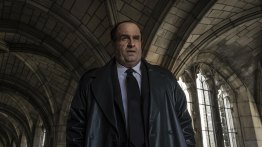
Like The Joker, but less pretentious: The Penguin reviewed

Television

Doctor Who fans may remember that after the show’s triumphant return in the early 2000s, we found out that showrunner Russell T. Davies had agreed with BBC mandarins to rid the franchise of some of its more unwieldy elements in order to make it palatable to casual viewers. Gotham City has long been the perfect

A wish-fulfilment romance: Intermezzo, by Sally Rooney, reviewed

Lead book review

An earworm from the time of Covid: the sound of Connell and Marianne having breathless sex, bedsprings squeaking. I’m talking not about 2020’s hit TV adaptation of Sally Rooney’s bestselling second novel, Normal People but about the relentless piss-take featured on BBC Radio 4’s Dead Ringers. After every few skits the show would cut to

The hare-raising experience that changed my life

More from Books

One wintry day during lockdown, the parliamentary political adviser Chloe Dalton discovered a new-born leveret on the track by her converted barn. It was only as long as her palm’s width, with a white star shape on its forehead. Ambivalent about interfering, she nonetheless gave it houseroom, despite being warned that brown hares can never

The Crimean War spelt the end of hymns to heroism and glory

More from Books

Leo Tolstoy served as a young artillery officer in the defence of the great Russian naval base of Sevastopol against British and French invaders in the middle of the 19th century. The first of his three short stories, collected as Sevastopol Sketches, came out as the siege was still in progress. In it he spelled

When Britannia ceased to rule the waves

More from Books

When the Royal Navy celebrated Queen Victoria’s Diamond Jubilee in 1897, 173 ships and 50,000 sailors filled the Solent. The Spectator (3 July 1897) described the ‘endless succession of battleships, cruisers, destroyers, gunboats and torpedo boats’ as offering ‘the most magnificent naval spectacle ever beheld’. More importantly, the fleet at Spithead ‘would have been able

Starving street urchins sell their sisters in the chaos of Naples, 1944

More from Books

Naples is ‘certainly the most disgusting place in Europe’, judged John Ruskin. The boisterous yelling in the corridor-like streets and beetling humanity filled the Victorian sage with loathing. (‘See Naples and die’ became for Ruskin ‘See Naples and run away’.) In the city’s obscure exuberance of life he could see only a great sleaze. Naples

The flowering of enlightenment under Oliver Cromwell

More from Books

In 1651, the poet Andrew Marvell was working for the parliamentarian military hero Sir Thomas Fairfax, tutoring his daughter Mary on Fairfax’s Nun Appleton estate near York. When he wasn’t delivering language lessons to his young charge, Marvell was busy composing one of the most astonishingly experimental poems of the 17th century. Opera in the

Is now the most exciting point in human history?

More from Books

Yuval Noah Harari has sold more than 45 million books in 65 languages. He is a professor with a PhD from the University of Oxford, has spoken at TED and the World Economic Forum in Davos, and his latest book, Nexus, is considered ‘erudite, provocative and entertaining’ by Rory Stewart and ‘thought-provoking and so very

Who should win the Stirling Prize?

Arts feature

The Stirling Prize is the Baftas for architects, a moment for auto-erotic self-congratulation. Awarded by the Royal Institute of British Architects, its premise is straightforward: it’s for Britain’s best building of the year. But this year, it seems the prize committee has struggled even with this. Among the six projects shortlisted for this ostensibly nationwide

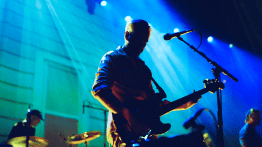
My night with the worst kind of nostalgia 

Pop

American Football are a band whose legend was formed by the internet: some Illinois college kids who made an album for a little label in 1999, went their separate ways, and in their absence found that a huge number of people had responded to their music. They duly reunited in 2014. They are often identified

Not for the squeamish: The Substance reviewed

Cinema

Both horribly familiar and wonderfully shocking, this body-horror film written and directed by Coralie Fargeat does a very traditional thing – turning the scramble for youth and beauty into a monster of immeasurable disgust and immorality – in a huge way. There is nothing minimal or restrained or overly clever here; nothing of the nuance

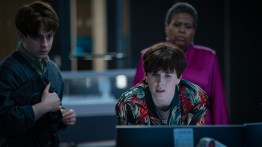
More Airplane! than Speed: Nightsleeper reviewed

Television

Earlier this year, ITV brought us Red Eye, a six-part drama set mainly on an overnight plane from London to Beijing. Displaying a heroic indifference to plausibility, the show was an increasingly deranged mash-up of every thriller convention known to man – while still posing (when it remembered to) as a thoughtful exploration of realpolitik.

Damian Thompson

Manacorda’s thrills and spills at Prom 72

Classical

At a Hollywood party in the 1940s, the garrulous socialite Elsa Maxwell spotted Arnold Schoenberg, then teaching music at UCLA, looking miserable. So she pushed him towards the piano with the words: ‘Come on, Professor, give us a tune!’ I couldn’t help thinking of those words on Friday night, when we heard the first Proms

Lloyd Evans

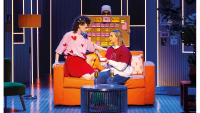
A massive, joyous, sensational hit: Why Am I So Single? reviewed

Theatre

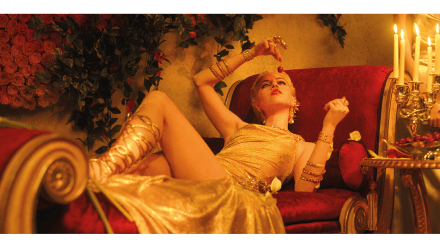
Why Am I So Single? opens with two actors on stage impersonating the play’s writers Toby Marlow and Lucy Moss. You may not recognise the names but you’ve probably heard of their smash-hit, Six, which re-imagined the tragic wives of Henry VIII as glamorous pop divas. This follow-up show is a spoof of vintage musicals

The sad story of the short-lived Small Faces

More from Books

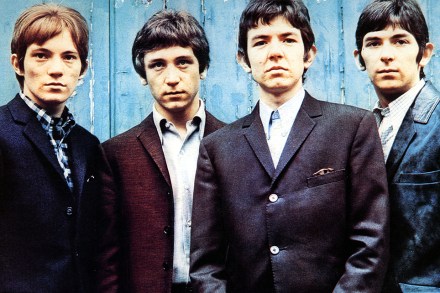
One Sunday in October 1967, about 16 per cent of the British population settled down at 8.15 p.m. to watch the Morecambe & Wise Show on ITV. This was mainstream family entertainment aimed at all age groups, but there was also a place each week for teen-friendly acts from the pop charts. That evening it