That'll keep them quiet...

So far this summer we’ve had the blackouts in Portugal and Spain, that rather astonishing Heathrow fire, yet more sabre-rattling between Russia and America and the former head of the Army warning that Britain must be ready for the ‘realistic possibility’ of war within five years. Then there was an old general on the radio telling civilians to prepare themselves for the struggle both mentally and practically – by stocking up on foodstuffs, loo roll, an FM radio and cash. Normally I don’t do what the radio tells me, but he got me thinking. And it turned out my wife – who is an actuary and is to risk what

Although a historian, until very recently I have been curiously incurious about researching my own slightly peculiar family. How was it, for example, that my grandfather, originally a penniless Welsh peasant, sired a dynasty that in three generations has spread to three continents and includes a squillionaire who founded a multinational club business with 75 branches in 42 cities around the world? And on the dark side of family secrets, why did my father marry a dying woman just released from Holloway jail after killing her own child? What diseases did my immediate ancestors suffer from, and are they likely to kill me too? While the answers to some such


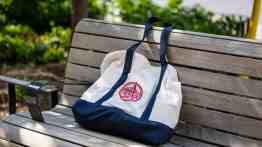
Over the years, I’ve made a lot of trips up and down the highway connecting the small Massachusetts town in which I grew up to a strip mall about ten miles away. In this strip mall is a branch of Trader Joe’s, the mid-range American supermarket chain known for its serviceable range of food, decent prices and workaday packaging. I do not drive, and nor do I live in America any more. But when I am staying with my parents, I like to accompany them on their shopping trips as I find American supermarkets fascinating, if freezing. Trader Joe’s is an OK option for my parents; not great, but fine.
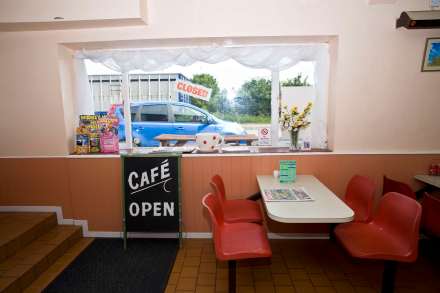
There’s something about motorway service stations that seems to encourage the very worst in human behaviour. They’re places where no doubt usually responsible members of society have long decided that it’s permissible to drop semi-industrial amounts of litter on to the verges, urinate all over the toilet floor and belch with impunity while queuing up for a Whopper at Burger King. For me, it was the full-to-the-brim child’s nappy that someone had left on a chair in the revolting ‘sit down café’ at a services near Preston that made me decide that I would never set foot in a Welcome Break, Moto or Roadchef ever again. I’m lucky; I have

‘You can always tell a proper lover of cricket’, Michael Kennedy, the great music critic, liked to say. ‘It’s whether they can appreciate a draw.’ A hit, a palpable hit. By concluding a magnificent Test series at two matches each, after India’s victory in the fifth game at the Oval, even England’s disappointed players may nod in agreement. They fell seven runs short, but nobody lost. Everybody who took part in this contest of equals should feel proud. ‘Proper’ cricket-lovers will have no doubt, for this contest was one for the annals. All five matches went into the fifth day, and India eventually prevailed by the tightest winning margin in

That it has taken its sweet time getting here cannot be denied, but, at last, it has happened. More than 70 years after the novel by Josephine Tey became an overnight sensation in 1951, a stage adaptation of The Daughter of Time has arrived in the West End. Voted the greatest crime novel of all time by the Crime Writers’ Association back in 1990, The Daughter of Time is Tey’s most unusual but brilliant detective story. It’s her most unusual because its sees her Inspector Alan Grant – the central character in five of her detective stories – solving a crime from his hospital bed while recovering from a broken
When my father, a barrister who still insists on calling himself ‘working class’, talks to his friends about their early days in London, I almost reel at how pleasant it all sounds. Cheap rent in Chelsea. Jobs they got by word of mouth. Long holidays and longer lunches. It sounds less like real life and more like a Richard Curtis fantasy. My own version of post-university London is somewhat different. I have had a privileged life. I’m one of six children, all privately educated – the result of a Catholic mother, said barrister father and years of school fees paid to institutions that, frankly, struggle to justify their expense. I



Every time I’m in Switzerland, where I grew up, I find myself madly squeezing as much rubbish as I can into a garbage bag. It’s a delicate and messy task. In Switzerland, every bag of non-recyclable waste comes with a price tag – and it’s expensive. You won’t be surprised that the Swiss have perfected the art of recycling, aiming to minimise the amount that ends up in those pricey bags. The system is both simple and ruthless. Across Switzerland – except for the canton of Geneva – every household is required to use government-sanctioned bin bags for anything that can’t be recycled. They’re not your ordinary supermarket variety –

At a time when Britain feels increasingly unstitched – with families queuing at food banks and sewage drifting from rivers to seas – it’s almost impressive that anyone has the emotional energy to be annoyed by vegans. Yet we continue to provoke strong feelings, and Katie Glass gave strong voice to them in these pages last week. So allow me to be annoying again, and disagree. Katie says veganism is becoming an ‘extremist’ lifestyle. But to be vegan is, quite simply, to opt out. We choose, as consistently as possible, not to hurt, kill or exploit animals – nor to induce others to do it on our behalf. That’s it.

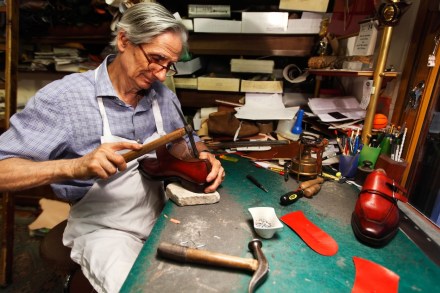
Just before my father died, he visited Mannina in Florence to have his feet measured for a pair of shoes. I’d found the handwritten receipt in his desk on thin yellow paper, stapled with samples of leather. Online pictures of Mannina showed a glass-fronted shop of lacquered wood and brass, the name in beveled gold across the door. So after months without a holiday, I booked a cheap short haul flight from London to Italy, determined to track down these missing shoes. My father had been a tailor for much of his life, the third man in Pakeman Catto & Carter, an established men’s clothing shop in the Gloucestershire town

These days, most English seaside towns are sites of national mourning. You pay your respects by walking up some deathtrap pier, dropping two pence in an arcade coin pusher and whispering, your flower now on the grave: ‘Ashes to ashes, dust to dust.’ But Cowes, on the Isle of Wight, has managed to stave off this sorry end. Its secret is Cowes Week. Cowes Week, which starts today, is an annual sailing regatta. It has earned its place as a respected event in Britain’s sporting calendar – always in August, between Glorious Goodwood and the Glorious Twelfth – but its beginnings were unambitious. On 10 August 1826, following an advertisement


Day four at Glorious Goodwood is always my favourite of the meeting but, with such competitive racing, it is hard to pick winners at the best of times. However, yesterday’s downpour – which changed the ground from the fast side of good to ‘heavy’ in just an hour – has complicated things still further. Ed Arkell, the clerk of the course, predicted last night that the ground could be back to ‘good to soft’ by the start of racing today but that’s by no means certain. The Coral Goodwood Handicap (1.20 p.m.) is a real favourite race of mine and, other than looking for a well handicapped horse, I work


As I sit under the sole tree on a Spanish beach, watching my fellow Brits shudder at the writhing horror show contained in the restaurant’s seafood display, it strikes me the middle classes don’t actually much like the dead-eyed edibles under the waves – we’re just conditioned to pretend to because eating them is supposedly chic. Sure, we extol fish as a sustainable and sophisticated source of high-quality protein, vitamin D and what sounds like K-pop’s next girlband, omega-3. It’s the well-informed, thinking man’s dinner, akin to choosing a Tesla before Elon Musk’s meltdown phase. But let’s be honest: the glassy stare (I’m still talking about the fish), the slimy

Stanley Kubrick’s swooningly gorgeous film, Barry Lyndon, has just been re-released in cinemas to mark its 50th anniversary. Much ink has been spilled about its hypnotic beauty, its lavish attention to historical detail, its dreamy, luscious, candlelit photography. Yet William Thackeray’s bitingly satirical novel of the same name is often neglected – as is the true, harrowing story that inspired it. The book Barry Lyndon (first published in 1844) bore its genesis from the story of a real adventurer, Andrew Robinson Bowes, whose cruelty to his wife, the Countess of Strathmore, was notorious. Born Andrew Robinson Stoney, he rose to the rank of a lieutenant before marrying an heiress; after
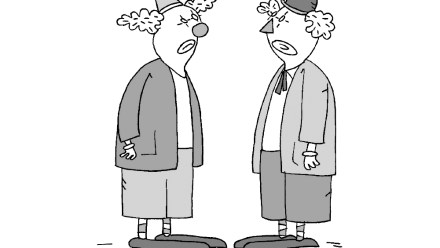
‘Don’t you kids know how to download a VPN?’
‘It was expensive but worth it.’
‘Are you going to talk about football all night?’
‘No Dylan, you can’t blame everything on climate change.’