Uncategorized

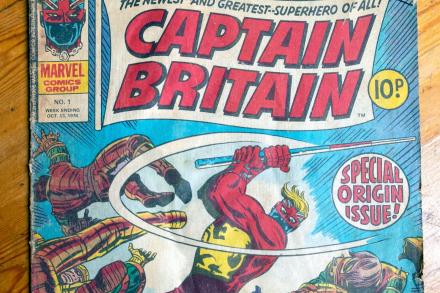
Captain Britain was an embarrassing superhero

The news that the latest Superman picture has been an enormous hit in the United States, but has been received rather more tepidly here, has been taken in many quarters to mean that there is an anti-American mood at large. Maybe this is dictated by America’s choice of president and administration, which means other countries are no longer as enamoured of that quintessentially all-American superhero. Alternatively, it could of course mean, as this magazine’s critic Deborah Ross has suggested, that the film simply isn’t very good and that we should all stick to the 1978 Christopher Reeve picture instead. Whatever the reason, the USA is Superhero Central, and no other
Who does Stewart Lee think he is?

Is Stewart Lee a comedy genius or just another smug leftie comic? The country’s 41st-best stand-up, as he likes to remind us in reference to a Channel 4 poll, has built up so many protective layers that he is almost beyond criticism – which I imagine suits him just fine. As if to prove the point, he’s posted dozens of negative reviews on his website, presumably to get one over on his more unenlightened critics: ‘See, not even your wrongheaded opinions affect me.’ He’s even included a quote from our own James Delingpole, writing in the Daily Telegraph, who describes Lee as ‘not funny and has nothing to say’. So

Are we the new hillbillies?

Have you ever heard of Duddies’ Branch? Chances are, you haven’t – because, firstly, its brief moment of fame came many years ago and, secondly, Duddies’ Branch does not actually exist. To explain: ‘Duddies’ Branch’ is the politely fake name given by an American anthropologist, Rena Gazaway, to a real and isolated settlement in a hollow of the Appalachian mountains (almost certainly in Kentucky). Herself born into ‘hillbilly’ culture, Gazaway spent many months of the 1960s living with the people of Duddies’ Branch. She later published her findings in a shocking 1969 book called The Longest Mile. What Gazaway encountered in that lost wooded ‘holler’ reads like dystopian fiction, even

Do we really need state-funded restaurants?

Two British cities, Dundee and Nottingham, have been chosen as trial sites for a new government scheme to be piloted next year: state-subsidised restaurants. The Department for Science, Innovation and Technology has put up £1.5 million for the 12-month trial, initiated by the campaign group Nourish Scotland. If the restaurants are successful, they’ll be rolled out across Britain – nourishing us all – with a subsidised meal for £3. Inspired by second world war state-funded canteens, they’re going to be called ‘Public Diners’ – clever branding, with its quasi-American vibe. Their branding matters because – as anyone who ever ate greasy slop from a tray at a state-run stolovaya in

Coffee House Shots Live: Are the Tories toast?

Watch Spectator editor Michael Gove, political editor Tim Shipman and assistant editor Isabel Hardman as they discuss where the Tories go from here, in a livestream exclusively for Spectator subscribers. The strange death of Tory England has been predicted before. But never has the ‘natural party of government’ faced a greater challenge to its survival. The Conservatives are facing attacks on all fronts from Labour, the Liberal Democrats and Reform UK. Kemi Badenoch’s six-month anniversary as leader was marked by the loss of nearly 700 councillors – and testing elections await her next year in Scotland and Wales. She has promised change with her long-awaited policy commissions, ahead of a make-or-break party conference in October. But can she turn